SL PERFORMANCE

Route analysis

Étape du Tour 2027: Cluses – Les Saisies, climb by climb.

The profile, the gradients and how to pace every climb, from a coach who prepares riders for the Étape du Tour every year.

Date
11 July 2027
Distance
154 km
Elevation gain
4,850 m
Categorised climbs
5
Finish
Les Saisies

The profile

Cluses → Les Saisies
CLUSES506 m LES SAISIES1,650 m 1,003 m Le Grand-Bornand 31 1,040 m La Clusaz 37 656 m Thônes 55.5 532 m Saint-Ferréol 71 422 m Ugine 80 726 m Beaufort 103.5 1,605 m Col du Méraillet 121.5 761 m Beaufort 134 711 m Villard-sur-Doron 138 1 1,618 m Col de la Colombière (15.9 km at 7.0%) 19.5 2 1,477 m Col de la Croix Fry (7.2 km at 5.5%) 44 3 853 m Col de la Forclaz de Queige (5.1 km at 8.2%) 89 4 1,748 m Col du Pré (12.6 km at 7.8%) 117 5 1,723 m Montée de Bisanne (12.4 km at 8.3%) 150 0154 km HAUTE-SAVOIESAVOIE

Profile based on the official Étape du Tour 2027 profile, subject to change. Numbers 1 to 5: the five climbs analysed below.

The climbs

Every climb, and how to ride it.

1

Col de la Colombière

Summit at km 19.5
Length
15.9 km
Average gradient
7.0%
Climbing
≈ 1,110 m
Altitude
1,618 m
Coach’s advice

The first climb, straight from the start on cold legs: 15.9 km at 7%. The trap of the day, everyone starts too fast. Stay at tempo (85 to 90% of FTP) and start eating at the foot.

2

Col de la Croix Fry

Summit at km 44
Length
7.2 km
Average gradient
5.5%
Climbing
≈ 400 m
Altitude
1,477 m
Coach’s advice

From La Clusaz, 7.2 km at 5.5%: the most rolling climb of the day. Stay in active endurance to recover from the Colombière and eat solid food. Do not get dragged along by group pace.

3

Col de la Forclaz de Queige

Summit at km 89
Length
5.1 km
Average gradient
8.2%
Climbing
≈ 420 m
Altitude
853 m
Coach’s advice

Short but steep: 5.1 km at 8.2% after the long, often hot valley from Thônes to Ugine. Ride at threshold without going over and fill your bottles before the foot: the big one is coming.

4

Col du Pré

Summit at km 117
Length
12.6 km
Average gradient
7.8%
Climbing
≈ 980 m
Altitude
1,748 m
Coach’s advice

The decisive climb: 12.6 km at 7.8% up to 1,748 m, the highest point of the stage, then the Col du Méraillet above Lake Roselend. Ride below threshold in a small gear and eat before the foot: a pacing mistake here is paid for on Bisanne.

5

Montée de Bisanne

Summit at km 150
Length
12.4 km
Average gradient
8.3%
Climbing
≈ 1,030 m
Altitude
1,723 m
Coach’s advice

The hardest finale: 12.4 km at 8.3% from Villard-sur-Doron, after almost 140 km. Fit a very low gear, split the climb into thirds and only push in the last one: from the summit, just 4 km remain to Les Saisies.

Race strategy

Six rules to reach Les Saisies with legs left.

01

Start below your pace

The first kilometres go fast, and so does the excitement. Stay below threshold on the first climb, even if people pass you: the day is decided on the last climb.

02

Climb at a steady effort

Pace by power or heart rate, not by speed. When the road steepens, spin your legs instead of surging.

03

Eat before you are hungry

Aim for 60 to 90 g of carbohydrate per hour, tested in training, and 500 to 750 ml of fluid per hour depending on the heat. A bonk starts two hours before you feel it.

04

Use the descents

That is where you recover, drink and eat. Put a layer on at the summit if the air is cool, and keep a margin: taking risks gains you nothing.

05

Keep something for the end

The finish is at altitude. Everything you save in the valleys and on the early climbs, you get back on the final climb.

06

Know the time limits

Write the cut-off times on your stem. Knowing them stops you panicking, and from burning matches for nothing when you are well inside the limits.
Extra services

Your pacing and fuelling, measured rather than guessed.

How much carbohydrate do you burn on a climb at threshold? How much fluid do you lose at 30 °C? The Metabolic Scan answers these questions in the lab, so you can apply these six rules with your own numbers.

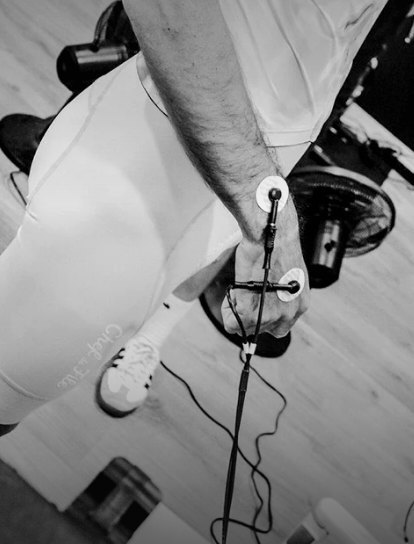
Athlete fitted with electrodes during an exercise test at The Metabolic Scan lab
Lab assessment
The Metabolic Scan

Two hours at the Toulouse lab to know your engine like a pro: a VO₂max test on your own bike, gas exchange, sweat and body composition analysis. Your plan and race-day strategy are then built on your real physiology, not on estimates.

  • Your thresholds and zones measured in the lab: VT1, VT2, FTP, VO₂max
  • Your carbohydrate and fat use at every intensity, for fuelling calibrated to the gram
  • Your sweat analysed, for hydration suited to the mountains and the July heat
  • Body composition and resting metabolism
  • Online report kept for life, zones exportable to your watch
Duration
2 h
Location
Toulouse
Protocol
On your own bike
Report
17 deliverables
Book my Metabolic Scan Get a preferential rate by booking through SL Performance and our partnership with The Metabolic Scan. Your results feed straight into your plan.

Feed stations

Locations and kilometres published in the official rider guide.

Coming soon

Cut-off times

Cut-off times and the minimum pace needed to stay ahead of the broom wagon.

Coming soon

Prepare this route with a qualified, experienced coach.

A plan built for these climbs, your pace on each one and your race-day fuelling plan.

State-qualified cycling coach (DEJEPS) · Former elite racer · Over 200 riders coached since 2017

Book my free discovery call See the plans